





What We Do

DMA provides full‑scope property tax assessment review and appeal services, identifying opportunities to reduce both real and personal property tax assessments across the U.S. and Canada. Our experts uncover inaccurate valuations, remove non‑taxable assets, identify obsolescence, and ensure your properties are assessed fairly.

  • Lower current and future property tax liabilities
  • Recover overpaid property taxes
  • Gain clear visibility into your entire property tax portfolio

Reduce Your Property Tax Liability with Comprehensive Assessment Review

What we examine during a property tax assessment review:

Valuation Accuracy & Fair Market Value Analysis

  • Cost, income, and market-based indicators of fair market value
  • Economic and functional obsolescence
  • Industry‑specific valuation issues

Asset Classification & Taxable Value Accuracy

  • Correct classification of fixed assets
  • Removal of “ghost assets”
  • Exclusion of non‑taxable or intangible cost components

Inventory, Leased Equipment, & Pollution Controls

  • Inventory analysis and exemption review
  • Leased equipment valuation for lessors and lessees
  • Pollution control exemption analysis

DMA’s Property Tax Appeal Process

Identify Issues Worth Appealing

Engage Local Assessing Authorities

Negotiate Corrections

Represent in Administrative & Jurisdiction Appeals

Support Litigation as Needed

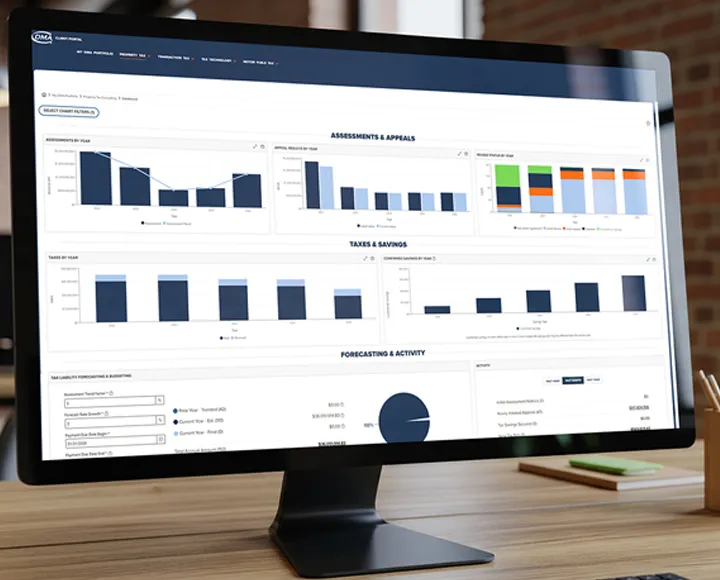
Real-Time Transparency Through DMA’s Client Portal

All DMA clients have access to our proprietary Client Portal, which gives you:

  • Real-time status across your entire tax portfolio
  • Property-level data, values, and tax history
  • Jurisdiction and assessor contact details
  • Activity tracking for assessments, negotiations, and appeals
Learn More east

Specialized Services Supporting Your Assessment Review

  • DMA identifies refund opportunities by reviewing prior‑year real and personal property assessments for errors, overlooked exemptions, or alternative valuation methods. After analyzing the underlying data, we provide a detailed report outlining potential refunds and a strategy to secure them. Our team files and monitors all refund claims on your behalf until the full amount is recovered.


  • DMA provides end‑to‑end property tax valuation services for complex and centralized assets, from forecasting and tax minimization strategies to full compliance outsourcing. We evaluate regulatory, legal, and economic factors alongside all major valuation approaches to determine accurate assessments and uncover obsolescence. Our team then collaborates with taxing authorities to implement effective strategies and guide you toward the most valuable appeal opportunities.

  • DMA analyzes all inventory accounts—including raw materials, WIP, finished goods, and supplies—to determine the correct taxable value and identify potential exemptions. We reconcile tax notices with book inventory, evaluate discrepancies, and assess factors such as location, type, accounting, and economic conditions. The result is a clear set of findings and recommended solutions, followed by DMA pursuing any applicable savings on your behalf.

  • DMA evaluates leased property to ensure lessees aren’t overpaying embedded property tax charges, and help lessors reduce taxable values and streamline compliance. Our team reviews lease agreements, invoices, and tax calculations to determine the correct taxable value. With your approval, we engage lessors and jurisdictions directly to secure appropriate tax savings.

  • DMA helps clients secure all available pollution control exemptions by identifying qualifying assets and managing the entire filing process. We review fixed asset records, interview facility personnel, inspect operations, and document eligible equipment. After filing exemptions with the appropriate jurisdiction, we provide a detailed Report of Findings so that future asset classifications remain accurate.

  • DMA’s Construction Cost Reporting service prepares the required assessment compliance reports that Canadian provinces use as the basis for future property valuations and taxation. Drawing on expertise from both the assessment and the construction industry, our team analyzes your project costs to produce a thorough, accurate report. These reports help ensure future assessments reflect true value and provide a reliable reference point if legislation or facility conditions change.

  • DMA’s Tax Bill Analysis service helps Ontario companies navigate complex capping and clawback calculations to ensure their tax bills are fair and accurate. We review all relevant tax documents, verify calculation methods, and, with your approval, negotiate revised assessments with municipal officials. This service can be provided as a standalone service or alongside your assessment review and appeal engagement.

Why DMA

50+ years of property tax leadership. Trusted by nearly half of the Fortune 1000.

National Reach and Local Expertise

Coverage across the U.S. and Canada, backed by deep relationships with local assessors and jurisdictional know‑how.

Experts in complex, specialized industries

Our valuation and sector‑specific experience uncovers issues generalists miss.

Comprehensive, end‑to‑end assessment review

We evaluate every opportunity including valuation accuracy, asset classification, obsolescence, inventory, leased equipment, exemptions, and more.

Stronger together: consulting + compliance integration

Our assessment, consulting, and compliance teams create a seamless, insight‑rich process.

Full transparency and client involvement

Clear rationale, shared decision‑making, and knowledge transfer throughout the engagement.

Best‑in‑class reporting and client portal

Real‑time portfolio visibility, property‑level data, history, jurisdiction details, and appeal activity, all in one place.

Start Saving on Property Taxes Today

Connect with a DMA property tax expert to uncover tax savings, assessment corrections, and refund opportunities.

Frequently Asked Questions About Corporate Property Tax Assessments & Appeals

Get clear answers to the most common questions about corporate property tax assessments, fair market value, commercial property tax, and property tax appeals. This FAQ gives financial and tax leaders the essential insights needed to manage real and personal property tax obligations and identify opportunities to reduce risk and tax liability.

  • While many value types exist, property tax is typically based on Fair Market Value (FMV), the price a knowledgeable buyer and seller would agree to. Assessors estimate FMV, apply an assessment ratio, then determine the taxable value after exemptions or caps.

  • Common issues include:

    • Outdated or incorrect data
    • Missing functional or economic obsolescence
    • Incorrect property records (e.g., size, age)
    • Market shifts not reflected in mass models

    Any of these can lead to an inflated value.

  • By providing credible evidence, such as market sales, income performance, cost information, or proof of physical or economic impairments. Strong, data-driven valuation support is essential for a successful appeal.

  • Appeal windows are short and vary by jurisdiction. If you wait for the tax bill, you’ve missed your appeal window. File shortly after the assessment notice is issued. Many companies rely on local experts to manage deadlines and appeal procedures.

  • A sale can reset the assessed value, sometimes dramatically. Buyers should model tax impacts, consider caps/abatements, and confirm how transfer taxes and recorded amounts may influence future assessments.

  • Many states tax machinery, equipment, and fixed assets, often using depreciation schedules that may not reflect true market value. Errors, misclassifications, ghost assets, and overlooked exemptions are common.

  • Key considerations include:

    • Software taxability
    • Removal of embedded intangibles
    • Freeport and other exemptions
    • Pollution control eligibility
    • CIP treatment
    • Economic or functional obsolescence

    These vary widely by state and require expert evaluation.

  • Look for:

    • Nationwide coverage with true local expertise
    • Deep valuation experience across industries and asset types
    • Senior-level involvement in your engagement
    • Commitment to transparency and knowledge transfer
    • A firm with a long track record and trusted reputation in the market
    The DMA Approach east